


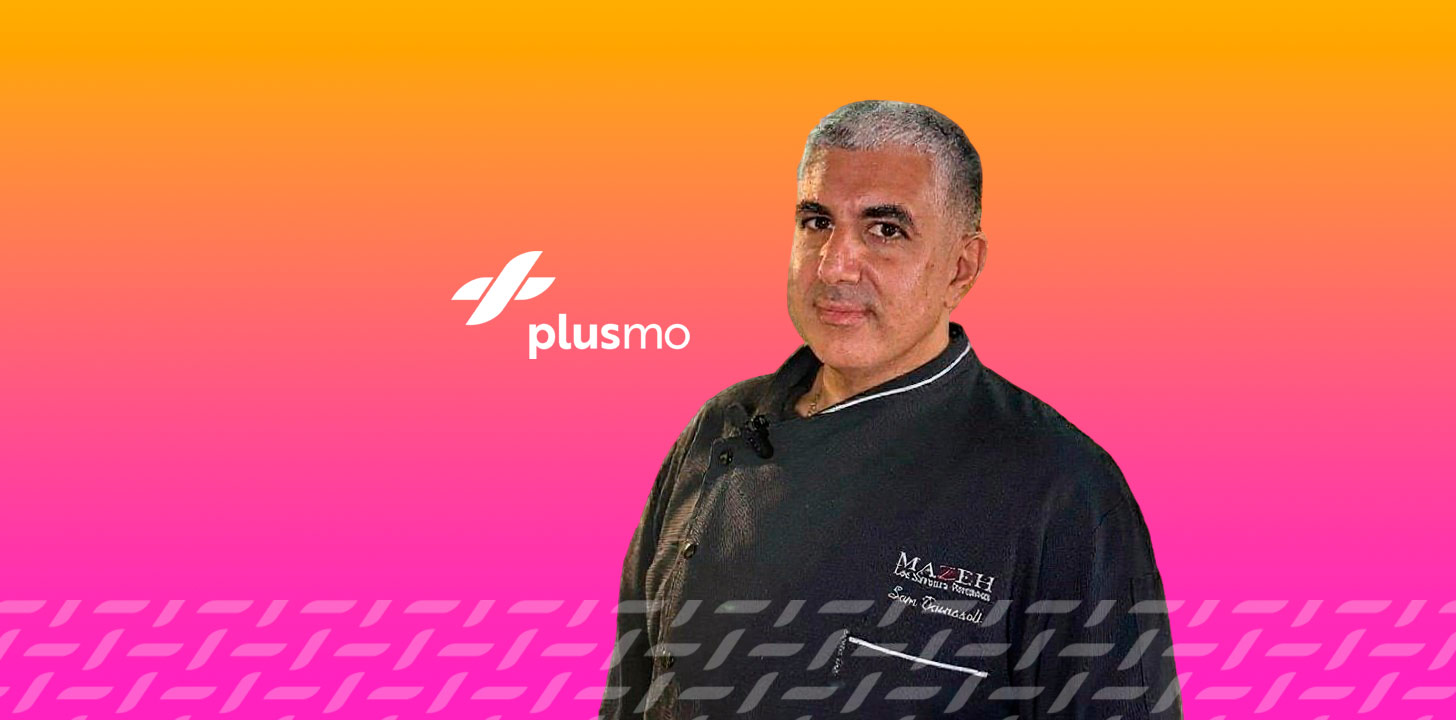
Mazeh is an Iranian restaurant located in Paris’s 15th arrondissement, founded in1984 by the Tavassoli family. Over four decades, it has become a benchmark ofPersian cuisine in France, thanks to its focus on authenticity and quality.
Today, Sam Tavassoli, a graduate of the FERRANDI culinary school with experience in renowned Parisian restaurants, leads the family business and drives its digital transformation.As part of this process, Mazeh implemented RichCommunication Services (RCS) campaigns in collaboration with Plusmo—an initiative that allowed the restaurant to test new ways of connecting directly with its customers, measure results in real time, and explore the potential of conversational marketing in the restaurant industry.
We spoke with Sam about his experience using this mobile communication tool:
—How did the idea of launching an RCS campaign with Plusmo come about?
Although our restaurant has a long history and a very loyal customer base, we found it interesting to try out this tool and analyze how it works and what results it could bring.
—What results did you obtain?
The first campaign performed well, so we decided to repeat it a couple more times. To be specific, the first campaign was excellent. Our main goal was to increase revenue, not visibility, and in that sense it was very effective. The next campaign didn’t have a direct impact on orders, but we did notice greater visibility and brand recall—people kept us more in mind, and reservations increased.
—If you could compare RCS with WhatsApp or other channels, what advantages do you see?
I think SMS is more direct and captures the user’s attention better. OnWhatsApp, you have to open the message, while with SMS you see it right away.That said, it depends on the audience and the type of business.
—What kind of messages did you send via RCS?
We sent a short message with a promotion and a link to our website. For example: “15% discount in October,” with a link to order online, book a table, or visit our Instagram. Interestingly, the first campaign—with a smaller discount—performed better than the later ones.
—Why do you think that happened?
Because we’re a restaurant with a 30-year history and a very loyal clientele.Also, our average ticket is high, so we don’t need big promotions—just to remind people that we’re here. For restaurants facing more competition, like pizzerias or sushi places, discounts or even RCS itself could have a much stronger impact.
—Who handled the content and distribution?
Plusmo managed everything from start to finish. I only approved the text, chose the dates, and sent a few photos. It was very simple.
—How did you measure the success of the campaigns?
Plusmo sent me a report a few days after each campaign. I also checked my website stats. In the first campaign, we saw a clear increase in visits and orders. In the second, more reservations. For example, we received 8 orders ata 7% click-through rate.
—Why did you decide to work with Plusmo?
Because of trust—and because I find it interesting to test new communication tools.
—How was your overall experience working with them?
Very good. The professionals at Plusmo have extensive experience in advertising and immediately understood what we needed. They were highly skilled and clear.
—Did you face any challenges during implementation?
Yes, during the second campaign we launched it right around the “Fête de la Musique” in Paris. Everyone was out on the streets, no one at home, so the results weren’t good. We learned to check the events calendar before scheduling.
—What advice would you give to other businesses looking to implement RCS?
Plan the timing carefully. For example, in our case, we should avoid big event days because people aren’t paying attention to our kind of food. And measure everything—weather, local events, audience type. That makes all the difference. I imagine for a pizzeria it’s crucial to launch campaigns during major sporting events, like a football match.
—Do you think RCSis the future of communication between businesses and customers?
Yes, but with caution. Right now it works well because it’s not saturated. If we start receiving ten messages a day, it’ll be like email—and people will stop paying attention. The key is to use it wisely and in moderation.


